ZelEn Security Architecture
The invention is not just encryption. The invention is governed post-quantum object security.
Math does not usually fail. Implementations fail.
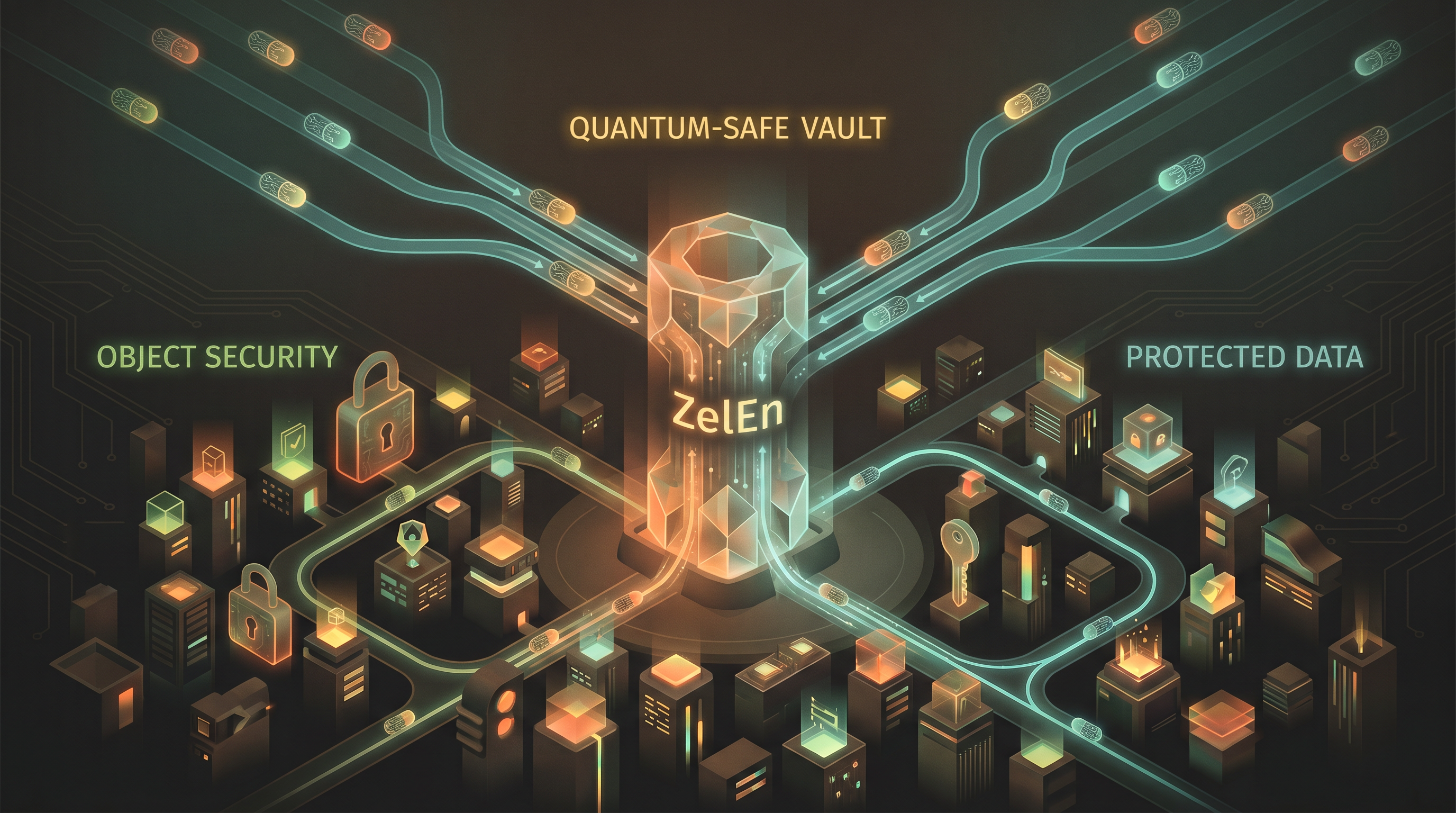
ZelEn is not just a wrapper around cryptographic algorithms. ZelEn is a complete security architecture for encrypted objects.
It combines post-quantum cryptography, authenticated containers, fail-closed validation, forensic visibility, key lifecycle design, digital signatures, and optional MTE governed decryptability into one system.
The Core ZelEn Invention
ZelEn’s invention is the transformation of encryption from a raw cryptographic operation into a complete governed object lifecycle.
Traditional encryption usually focuses on one thing: encrypt the data. ZelEn goes further.
ZelEn asks how the encrypted object is created, how keys are generated, how the container is structured, how tampering is detected, how inspection works without plaintext exposure, and how the system fails when something is wrong.
It turns post-quantum cryptography into a usable, inspectable, authenticated, fail-closed, containerized object-security system.
Invention 1: The .zelen Governed Container
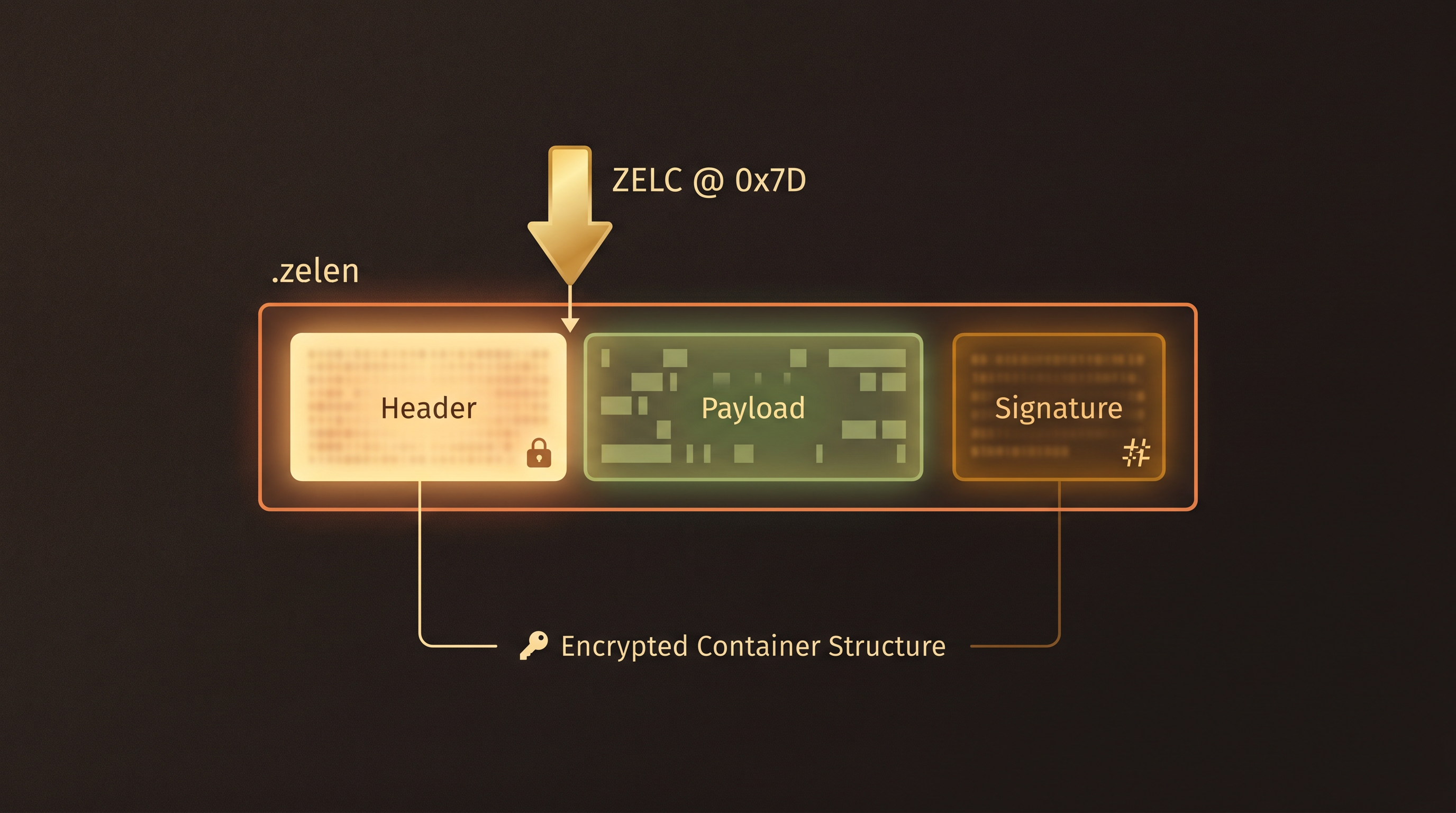
The .zelen container is one of the central inventions of ZelEn. Most encrypted files become random-looking blobs. They are difficult to inspect, classify, govern, or verify without attempting decryption.
The .zelen container is not just encrypted data. It is an authenticated post-quantum security object.
Invention 2: ZELC Marker at 0x7D
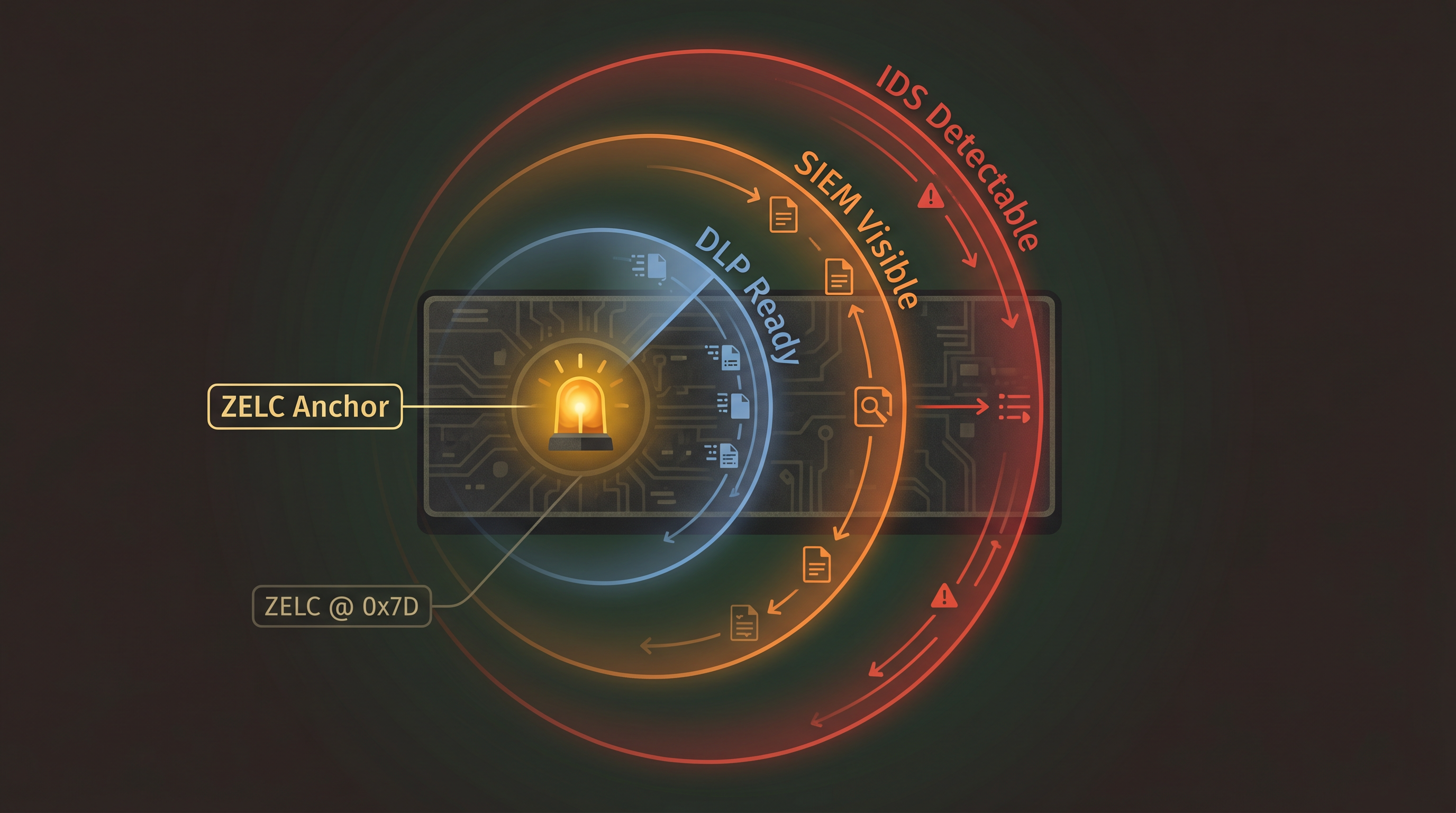
Encrypted files usually look like random noise. DLP cannot classify them easily, SIEM cannot understand them, IDS cannot distinguish them, and incident responders may not know whether the file is legitimate or suspicious random payload.
ZelEn solves this with the ZELC marker at 0x7D. It acts as a structural and forensic anchor inside the .zelen object.
Encrypted objects should be private, but not invisible to authorized security systems. The plaintext remains hidden. The object remains governable.
Invention 3: Fail-Closed Decryption
ZelEn is designed to fail closed. If anything is wrong, ZelEn refuses to release plaintext.
ZelEn does not partially decrypt, leak useful attacker details, or expose plaintext before full authentication. Failure becomes silent, generic, and closed.
Invention 4: Complete Post-Quantum Lifecycle
ZelEn is not only an algorithm wrapper. It is a full lifecycle system.
Invention 5: Clean File Separation
| File | Security Role |
|---|---|
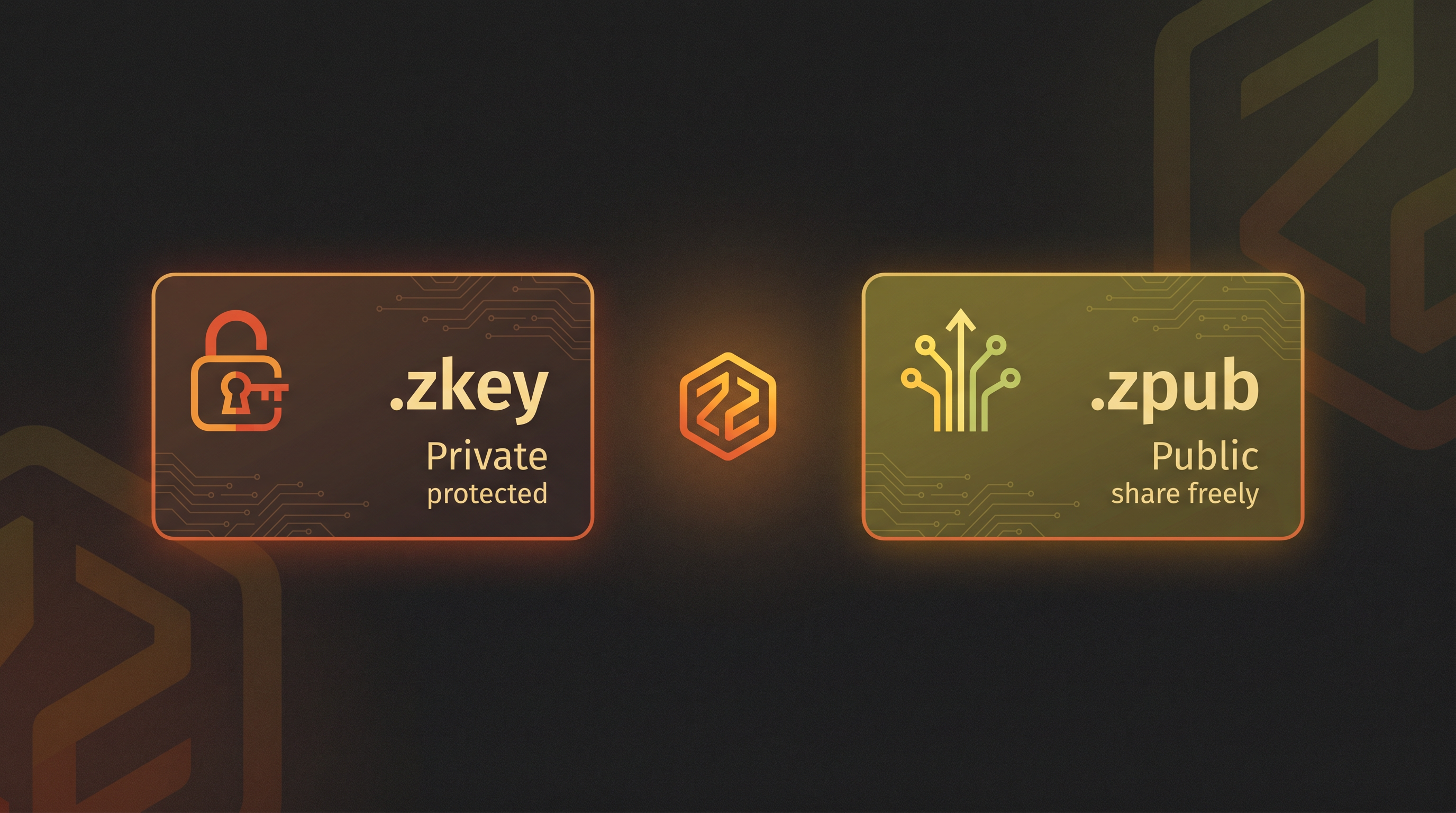
| .zkey | Private key bundle. |
| .zpub | Public key bundle. |
| .zcert | Quantum-safe certificate. |
| .zelen | Encrypted object. |
| .sig | Detached signature. |
| .ztau | MTE reconstruction datum. |
This separation prevents confusion between private material, public material, signatures, certificates, encrypted objects, and MTE reconstruction authority.
Invention 6: Post-Quantum by Design
The goal is simple: data encrypted today should remain protected tomorrow.
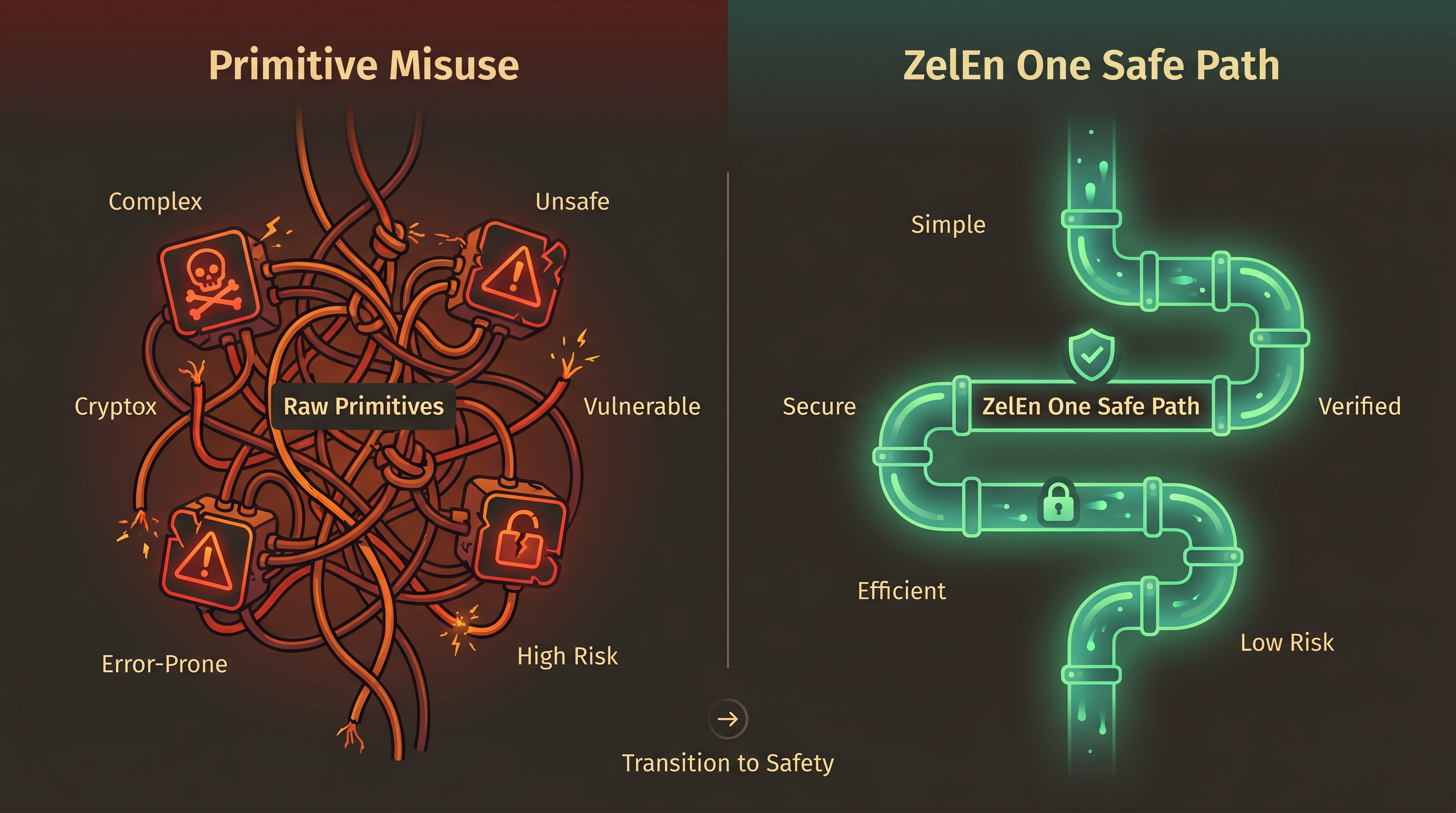
Invention 7: Misuse-Resistant Design
Common cryptographic mistakes
- Nonce reuse
- Weak key derivation
- Unauthenticated metadata
- Wrong key reuse
- Bad random number generation
- Improper error handling
- Signature confusion
- Partial decrypt leaks
ZelEn’s safer path
The developer does not manage raw nonce behavior, hand-wire the KEM-to-AEAD pipeline, invent a file format, or guess how signatures bind to containers.
ZelEn wires the dangerous parts internally. That is a security invention.
Invention 8: MTE Governed Decryptability
private key → decryption attempt.zkey decrypts + .ztau reconstructs + policy governsMTE separates cryptographic authority from reconstruction authority. The encrypted object must be reconstructed through the authorized τ datum before it can reach the cryptographic decryption stage.
Why MTE Matters for Security
Private-key exposure can be catastrophic in standard encryption. With MTE, the private key alone is insufficient.
MTE makes the encrypted object itself governed. It is not just locked. It must be structurally reconstructed.
MTE Is Not Security by Obscurity
MTE does not replace PQ5, AES-GCM, or require the MTE design to be hidden. The plaintext remains protected by ZelEn’s post-quantum cryptographic core while MTE adds governed object reconstruction around that core.
Invention 9: Inspectable Security Without Plaintext Exposure
ZelEn allows encrypted objects to be inspected safely. Security teams can understand the object without decrypting the object.
This supports security operations, forensics, DLP, SIEM, compliance, and incident response while preserving confidentiality.
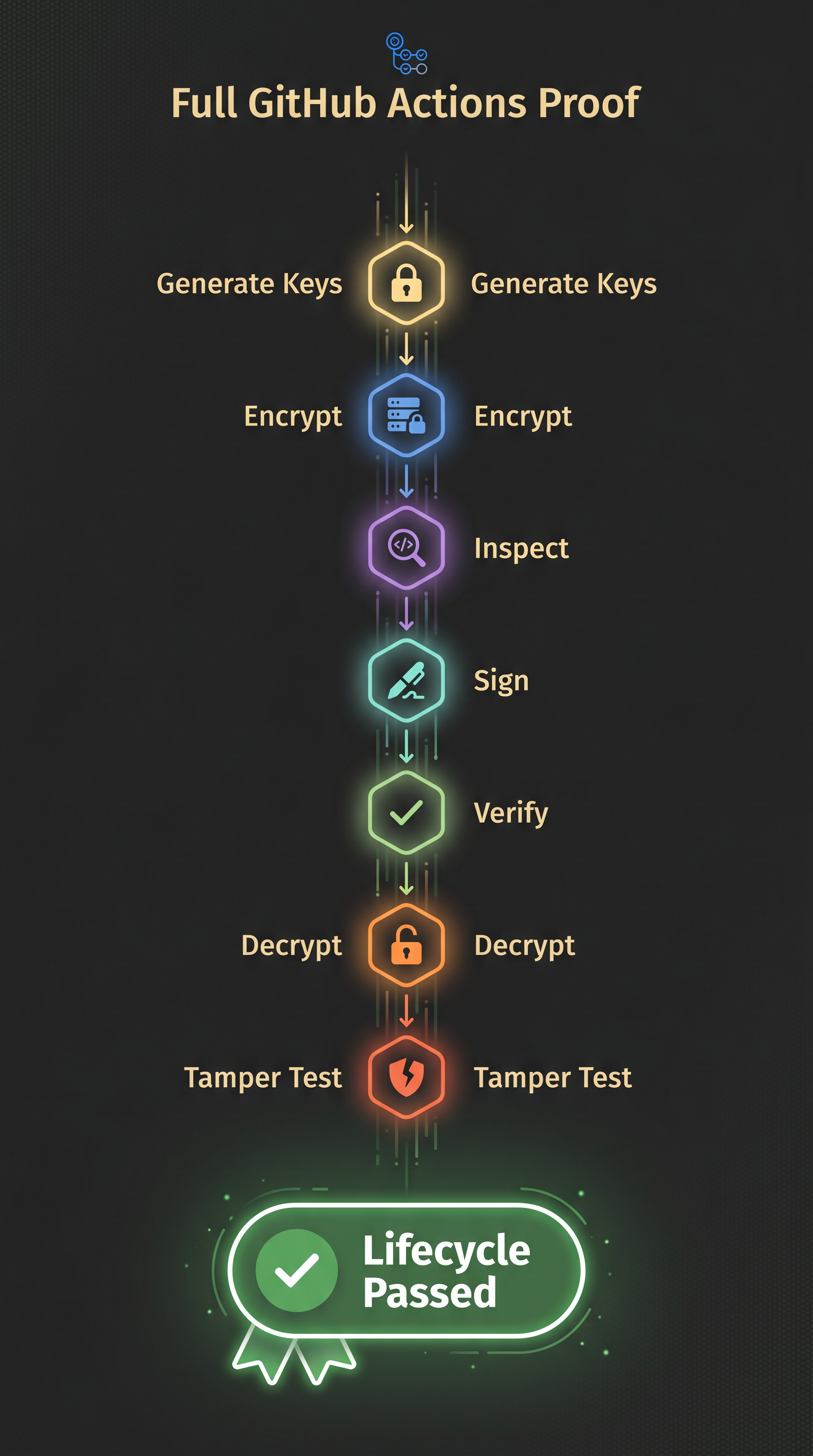
Invention 10: GitHub Actions Proof
ZelEn is not just a claim. ZelEn has a full automated cryptographic lifecycle proof that runs in a clean CI environment from a fresh Docker image.
What ZelEn Protects Against
What ZelEn Never Does
ZelEn Security Layers
The Security Philosophy
The Difference Between ZelEn and Ordinary Encryption
Ordinary encryption
- Encrypts data.
- Produces ciphertext.
- Requires a key.
- Often has limited inspection.
- Often relies entirely on the private key.
- Often leaves governance outside the encrypted object.
ZelEn
- Creates a governed encrypted object.
- Uses post-quantum primitives.
- Authenticates the container.
- Supports inspection, signing, and fail-closed validation.
- Supports forensic markers and MTE reconstruction authority.
- Supports CI proof and developer-ready workflows.
The MTE Difference
Without MTE: ZelEn PQ5 protects ciphertext.
With MTE: ZelEn PQ5 protects ciphertext, and ZelEn MTE governs the object.
MTE does not make the lock stronger by replacing the lock. It changes the object around the lock. The encrypted object must be reconstructed before the lock can even be reached.
Why the Private Key Alone Is Not Enough in MTE
The key opens the lock. The τ datum assembles the locked object. Policy permits the reconstruction. Without τ, the key cannot reach the correct object form.
Security Page Feature Cards
Post-Quantum by Design
ZelEn is built around ML-KEM and ML-DSA, not patched with post-quantum support later.
Governed Object Container
.zelen turns ciphertext into a structured, authenticated, inspectable security object.
ZELC Marker at 0x7D
Encrypted objects remain visible to security tooling without revealing plaintext.
Fail-Closed Decryption
Tampered, malformed, or unauthorized objects release no plaintext.
MTE Governed Decryptability
In MTE mode, the private key alone is not enough. The object must be reconstructed through τ.
Developer-Safe Lifecycle
ZelEn hides dangerous primitive wiring and gives developers a safe encryption path.
CI-Proven Security
The full lifecycle is tested automatically: keys, encryption, signing, verification, decryption, armor, and tamper rejection.
Clean Key Separation
.zkey, .zpub, .zcert, .zelen, .sig, and .ztau each have a clear security role.
Short Security Statement
ZelEn is a governed post-quantum object-security architecture.
It does not merely encrypt data. It creates authenticated encrypted objects that can be inspected, signed, verified, protected against tampering, and optionally governed through MTE reconstruction.
Security FAQ
What is the main security invention in ZelEn?
The main invention is governed post-quantum object security. ZelEn turns encryption into a complete lifecycle with keys, containers, authentication, inspection, signatures, fail-closed validation, and optional MTE governed reconstruction.
Is ZelEn a new mathematical algorithm?
No. ZelEn uses trusted cryptographic primitives such as ML-KEM, ML-DSA, AES-256-GCM, and Argon2id. The invention is the architecture, container format, lifecycle, and governed object model built around them.
What makes the .zelen container special?
The .zelen container is structured, authenticated, inspectable, and designed for post-quantum object security. It is not just a random ciphertext blob.
What is the ZELC marker?
The ZELC marker is a structural and forensic anchor placed at 0x7D. It helps tools recognize and inspect ZelEn encrypted objects without revealing plaintext.
What does fail-closed mean?
Fail-closed means ZelEn releases no plaintext unless every required validation step succeeds. If anything is wrong, decryption stops.
What does MTE add?
MTE adds governed decryptability. It requires the encrypted object to be reconstructed through the private τ datum before normal decryption can proceed.
Does MTE replace encryption?
No. MTE does not replace PQ5 encryption. It wraps around the encrypted object as a governed structural layer.
Why is private key alone not enough in MTE?
Because the MTE object must be reconstructed through .ztau before the private key can decrypt the canonical encrypted body.
Can security tools inspect ZelEn files?
Yes. ZelEn supports inspection of encrypted containers without exposing plaintext.
What is the simplest way to describe ZelEn security?
ZelEn PQ5 protects ciphertext. ZelEn MTE-PQ5 governs the object.
ZelEn is not just encryption.
ZelEn is the security architecture around encryption.
It gives post-quantum cryptography a container. It gives encrypted data a structure. It gives security teams visibility. It gives developers a safe path. It gives enterprises governed objects.
And with MTE, it changes the meaning of decryption itself: the private key is no longer the whole story. The object must also be reconstructed through τ.
Built with 💛 by Haja Mo.