Zelfire / ZelC Ecosystem · NIST PQC FIPS 203 • 204 • 205
Zelen Quantum Encryption
Quantum-safe object encryption for the Zelfire ecosystem.
PQC Provider
liboqs
Provider Status
✓ Available
AES-256-GCM
✓ Available
Security Mode
Production
PQC Provider
liboqs
Default Profile
ZELEN-PQ5
KEM Algorithm
ML-KEM-1024
Signature Algorithm
ML-DSA-87
AEAD Cipher
✓ AES-256-GCM
Capabilities
Full post-quantum object security with native key file formats
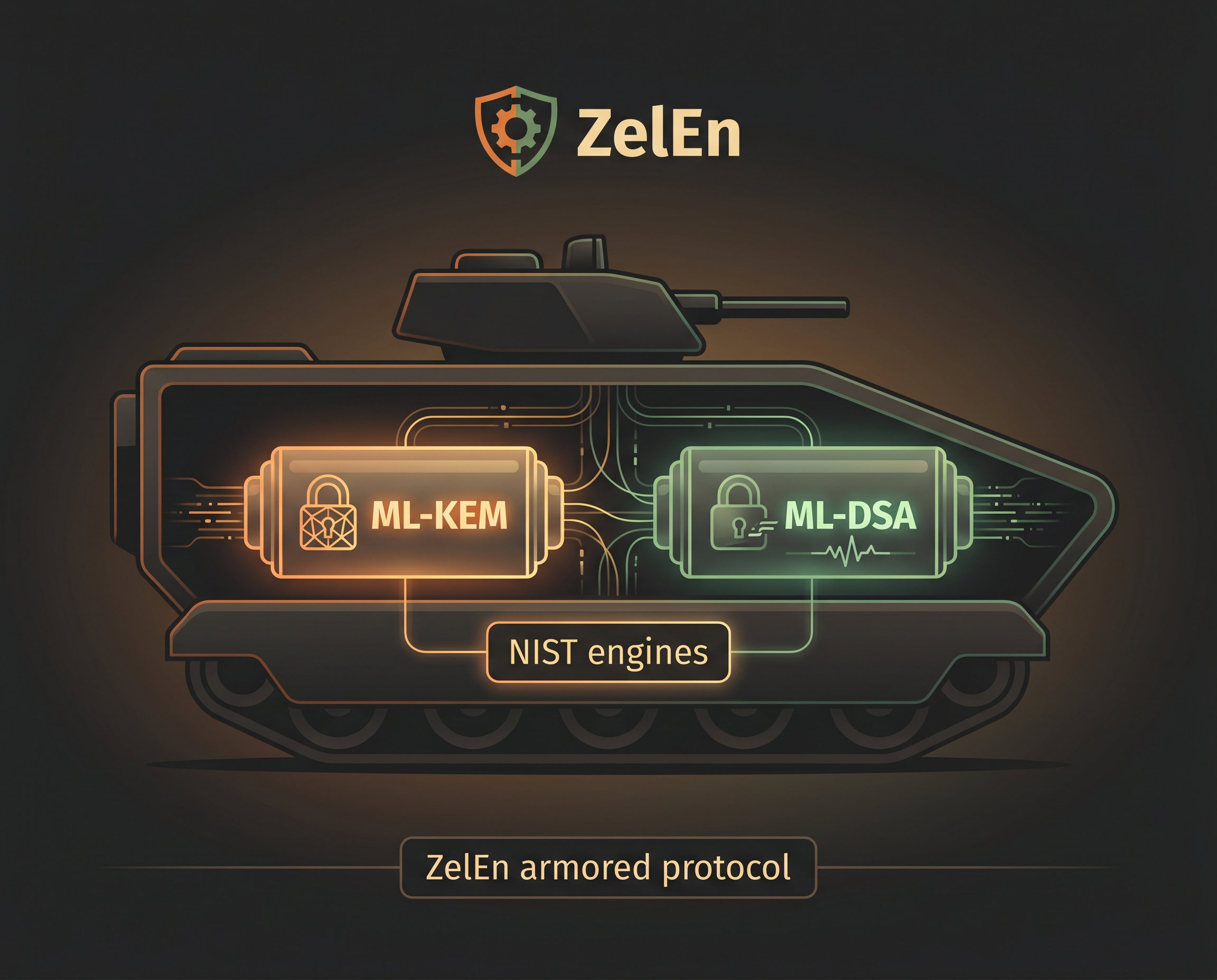
ML-KEM Key Encapsulation
NIST FIPS 203 — ML-KEM-768 (Level 3) and ML-KEM-1024 (Level 5).
IND-CCA2 secure against quantum adversaries.
ML-DSA Digital Signatures
NIST FIPS 204 — ML-DSA-65 and ML-DSA-87.
EUF-CMA secure lattice-based signatures. Optional SLH-DSA secondary layer.
AES-256-GCM Encryption
96-bit nonce, 128-bit authentication tag.
AAD binds ciphertext to the full ZelEn header. Fail-closed on auth failure.
Native Key Formats
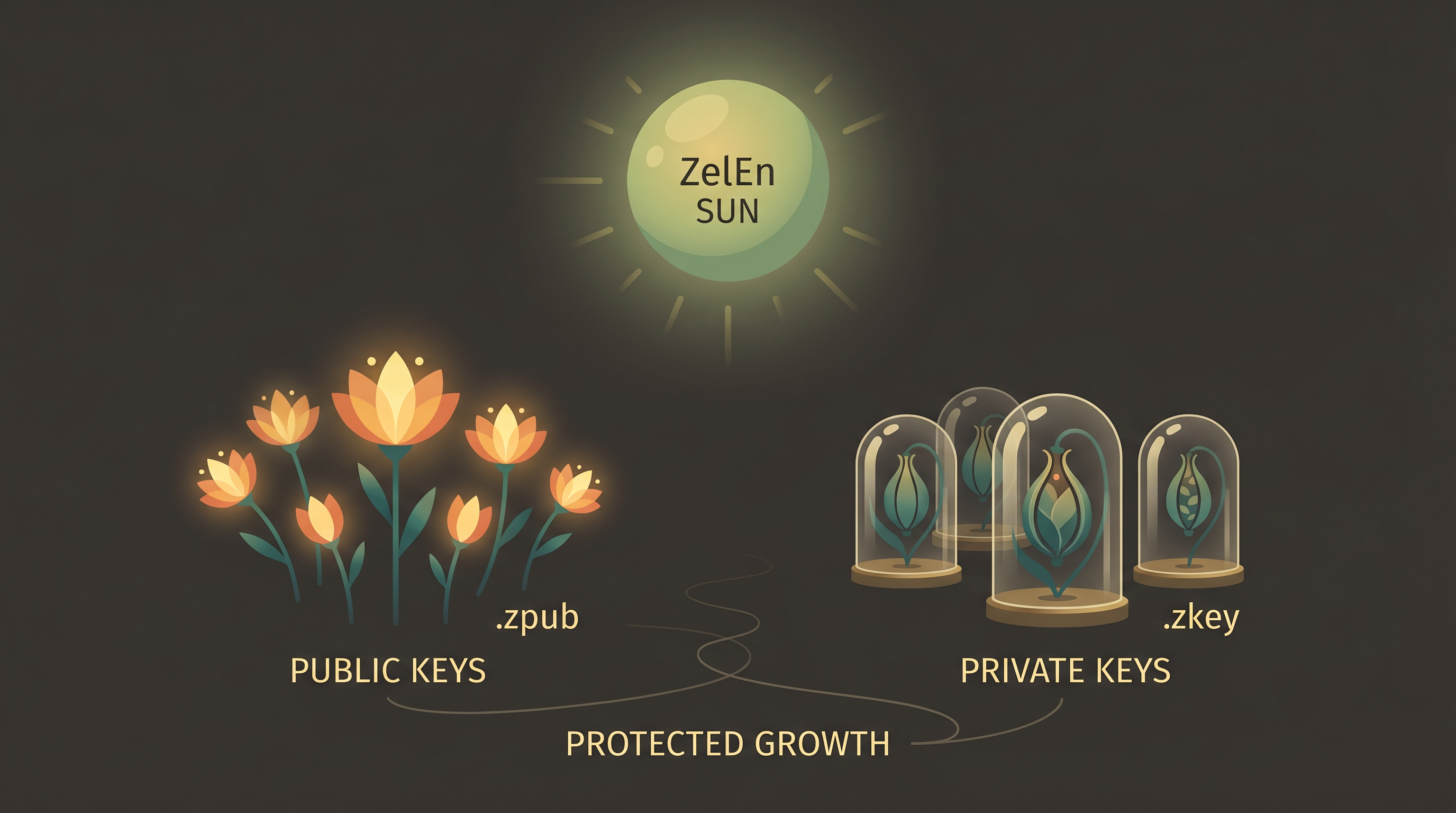
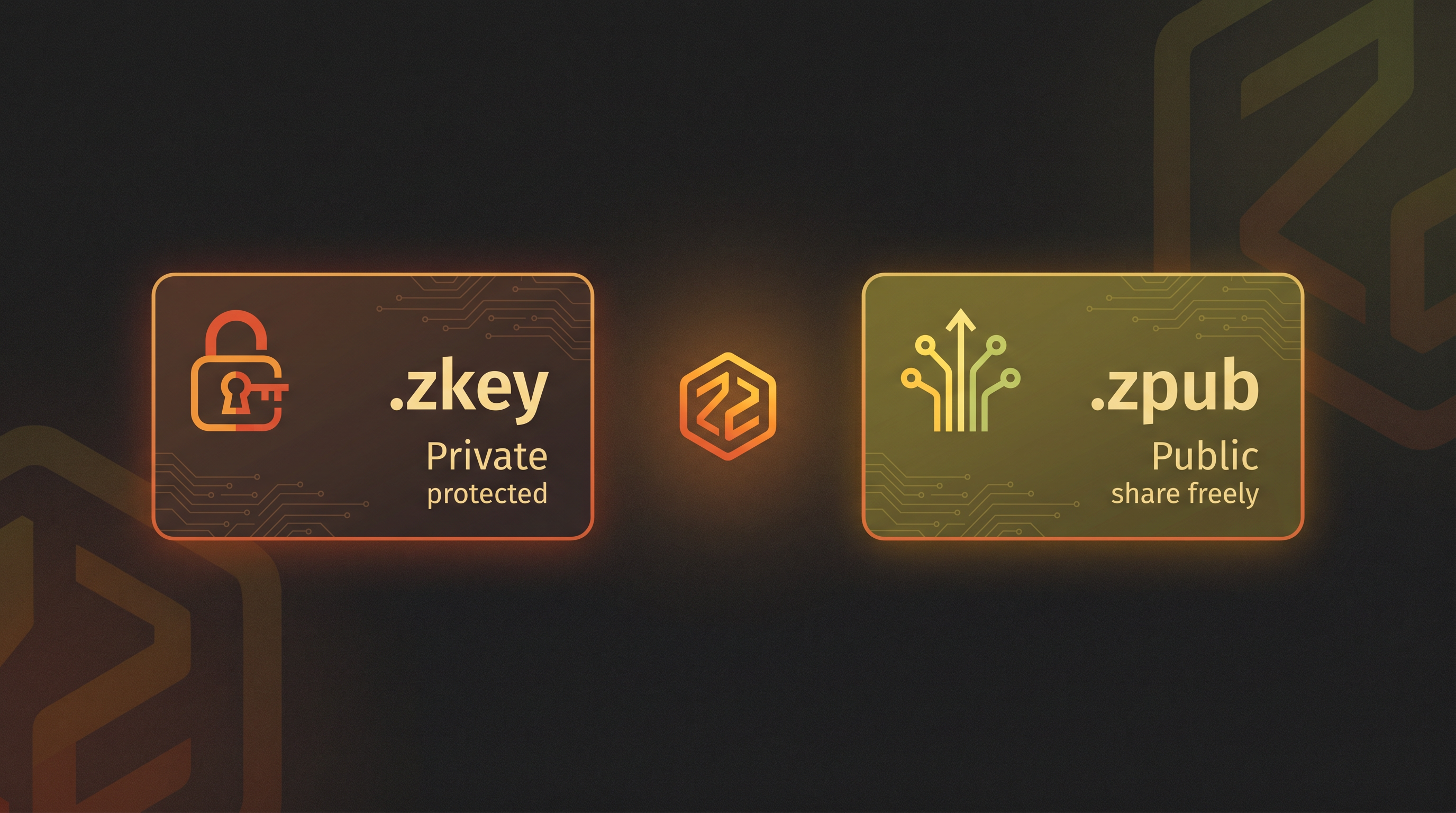
.zkey (passphrase-protected private key),
.zpub (public key bundle),
.zcert (quantum-safe certificate).
Argon2id key protection.
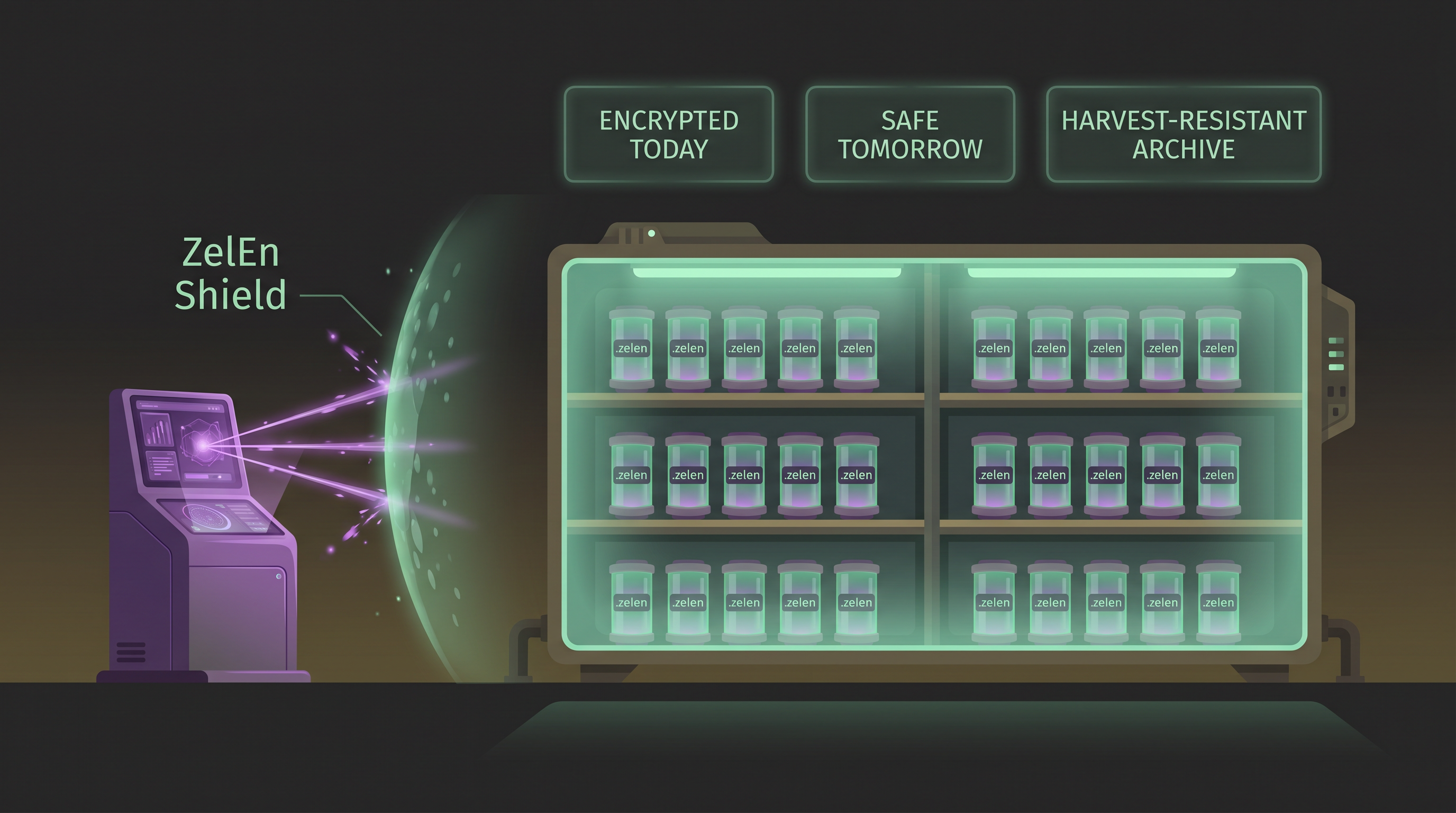
.zelen Containers
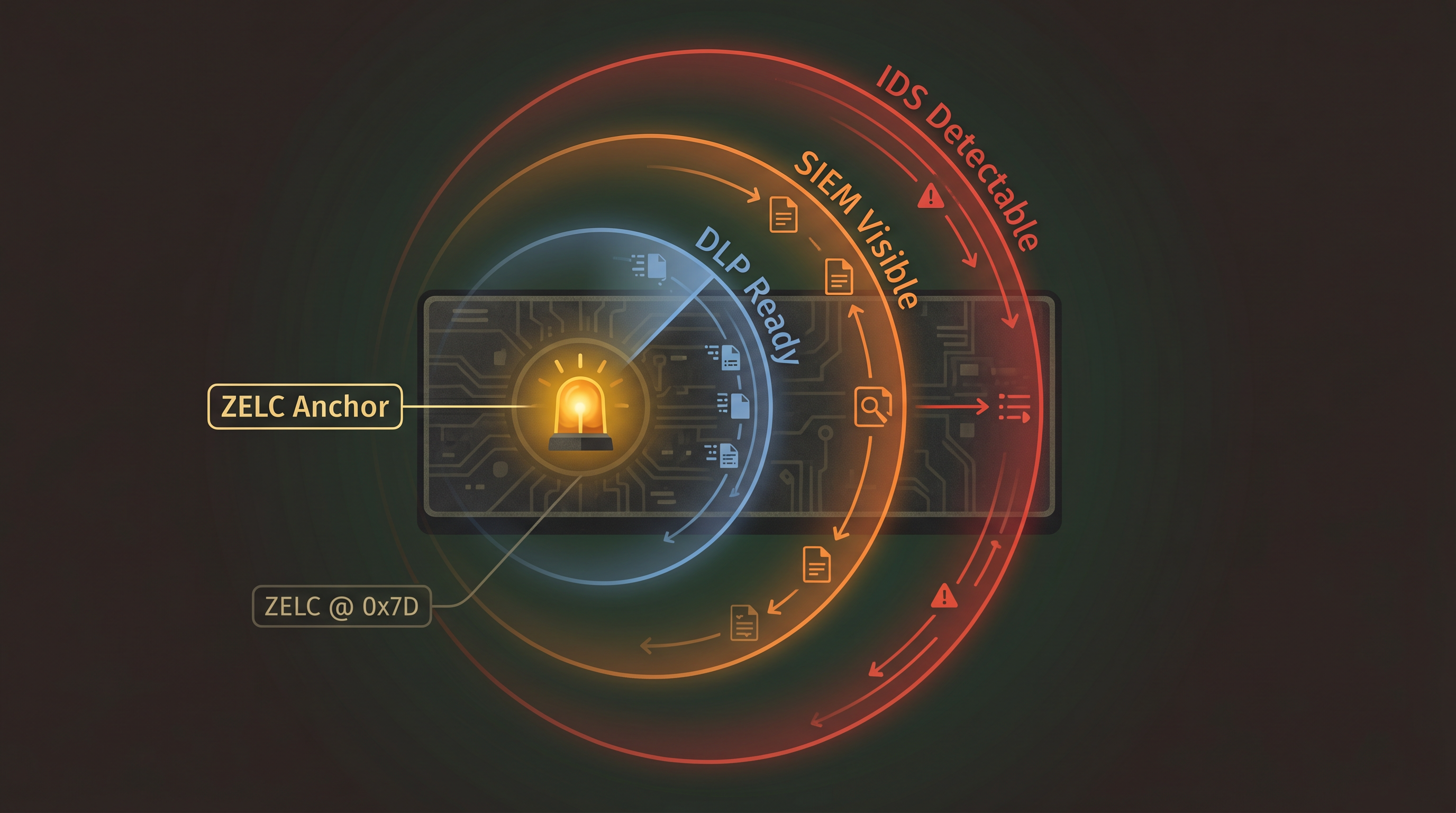
Self-describing encrypted objects. Binary header with ZELEN magic and
ZELC brand marker at offset
0x7D.
Suite-agile, forward-compatible.
HKDF Key Schedule
Domain-separated HKDF-SHA256. Length-prefixed canonical encoding prevents
concatenation ambiguity. Separate keys for payload, header auth, and signature binding.
Security Suite Profiles
ZELEN-PQ3 (Suite 0x0100), ZELEN-PQ5 (0x0101, default),
ZELEN-PQ5-SLH (0x0102 with SLH-DSA). Suite negotiation in header.
Audit Logging
Structured audit events for key gen, encrypt, decrypt.
Zero-secret logging policy — keys, passphrases, and plaintext are never logged.
Cryptographic Foundations
The mathematical structures underpinning quantum-safe security
Module Learning With Errors — ML-KEM hardness assumption
Given and , recovering is computationally infeasible.
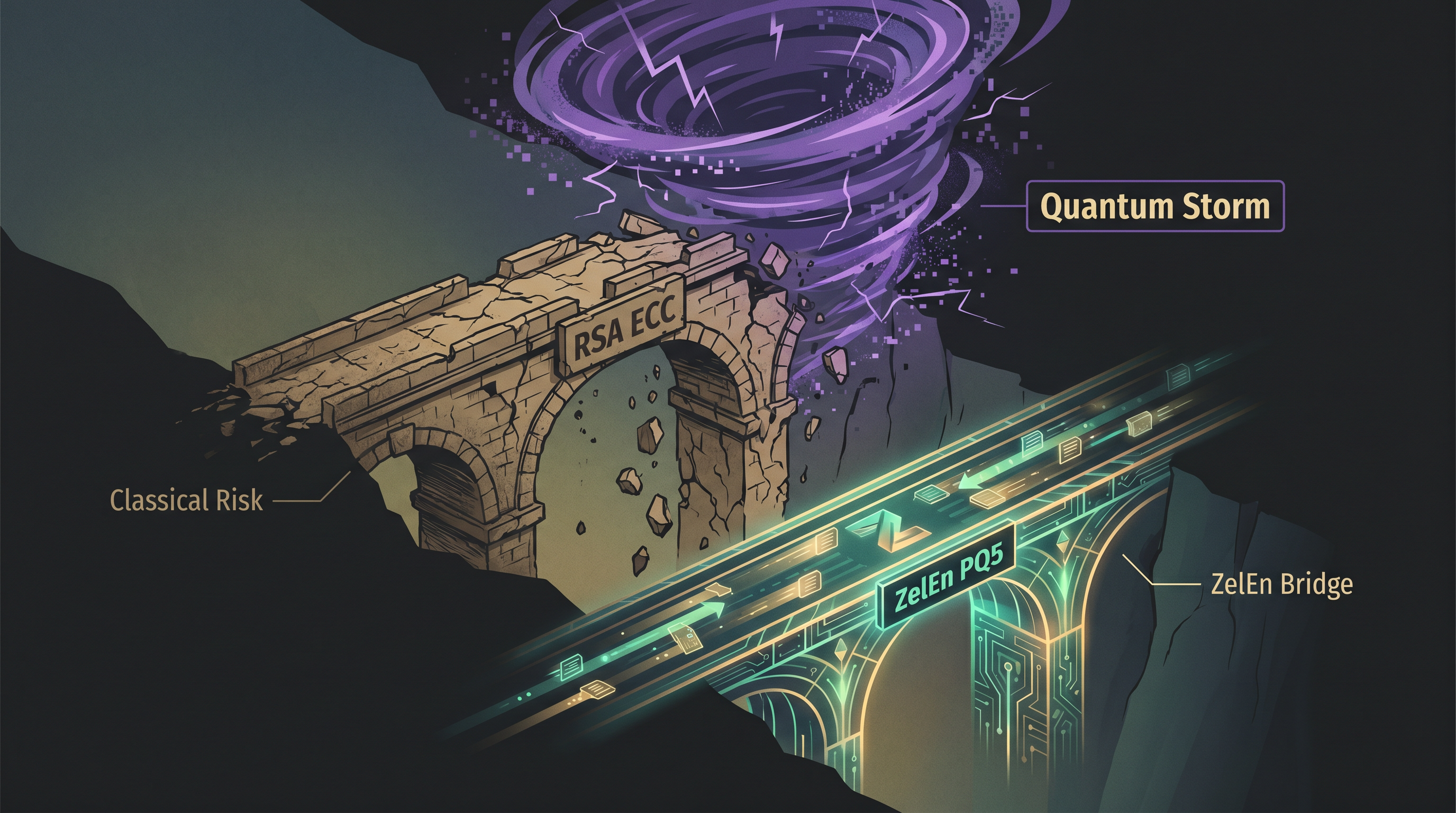
Resistant to quantum attacks via Grover and Shor algorithms.
Key Encapsulation — IND-CCA2 security
Encapsulation produces a shared secret and ciphertext .
Only the holder of the secret key can decapsulate.
Fiat-Shamir with Aborts — ML-DSA signature
Signature validity requires .
The abort mechanism prevents secret key leakage through side channels.
HKDF-SHA256 — Domain-separated key schedule
Each derived key uses a unique label, preventing cross-context key reuse
across payload encryption, header authentication, and signature binding.
AES-256-GCM — Authenticated encryption
96-bit nonce, 128-bit authentication tag. Additional authenticated data
binds the ciphertext to the full ZelEn container header.
Security advantage bound
Adversarial advantage is negligible. Classical security ≥ 256-bit,
quantum security ≥ 128-bit (NIST Level 5).
Security Invariants
Hard guarantees enforced by the protocol
- ✓ ZELEN magic verified at offset 0x00 before any processing
- ✓ ZELC brand marker verified at exact offset 0x7D — any deviation rejects the container
- ✓ KEM ciphertext integrity verified against digest in header before decapsulation
- ✓ Header authentication tag verified constant-time before AES-GCM decryption
- ✓ AES-256-GCM authentication tag verified — plaintext released only on success
- ✓ No plaintext oracle — production errors are generic, reveal no oracle information
- ✓ Nonces never reused — fresh random 96-bit nonce per encryption
- ✓ Private keys never stored on server — returned as download only
- ✓ Canonical encoding on all multi-field KDF inputs — no ambiguous concatenation
- ✓ CSRF protection on all forms — constant-time token comparisons
- ✓ Mock provider disabled in production environments
- ✓ Upload extension whitelist — only .zpub, .zkey, .zcert, .zelen accepted
- ✓ Rate limiting on all crypto operations
- ✓ Temporary files use unpredictable names and are securely deleted after use